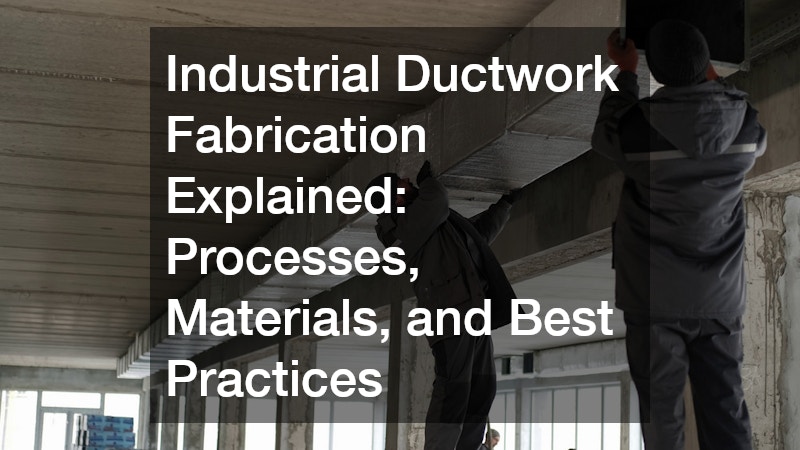
Industrial ductwork fabrication is a critical part of modern manufacturing, processing, and commercial building systems. From factories and power plants to warehouses and large commercial facilities, properly fabricated ductwork ensures safe airflow, temperature control, and compliance with regulations. When done correctly, industrial ductwork fabrication improves efficiency, protects equipment, and supports worker safety.
What Is Industrial Ductwork Fabrication?
Industrial ductwork fabrication is the process of designing, cutting, shaping, and assembling metal ducts used to move air, fumes, dust, or gases through a facility. These duct systems are often much larger and more complex than residential or light commercial ductwork.
Unlike standard HVAC ducts, industrial systems are built to handle high airflow volumes, extreme temperatures, corrosive materials, and heavy use. Because of this, precision and durability are essential in every stage of fabrication.
Why Industrial Ductwork Fabrication Matters
Industrial environments rely on controlled airflow to function safely and efficiently.
Safety and Compliance
Many industries must follow strict safety and environmental regulations. Properly fabricated ductwork helps remove harmful fumes, dust, or heat from work areas, reducing health risks and keeping facilities compliant with codes and standards.
System Efficiency
Well-designed ductwork improves airflow efficiency, which reduces energy costs and strain on fans and motors. Poorly fabricated ducts can lead to leaks, pressure loss, and uneven airflow.
Equipment Protection
Industrial ductwork fabrication also protects machinery. By managing heat, moisture, and airborne particles, duct systems help extend the life of equipment and reduce downtime.
Common Materials Used in Industrial Ductwork
Material selection plays a major role in performance and lifespan.
Galvanized Steel
Galvanized steel is one of the most common materials used in industrial ductwork fabrication. It is strong, affordable, and resistant to corrosion, making it suitable for many general applications.
Stainless Steel
Stainless steel is used in environments where corrosion resistance is critical, such as food processing, chemical plants, and pharmaceutical facilities. It is more expensive but offers long-term durability.
Aluminum
Aluminum is lightweight and resistant to rust. It is often used in systems where weight is a concern or where moderate corrosion resistance is needed.
Specialty Alloys
In high-heat or highly corrosive environments, specialty alloys may be required. These materials are chosen based on the specific conditions of the facility.
The Industrial Ductwork Fabrication Process
Industrial ductwork fabrication involves several key steps.
Design and Engineering
The process begins with detailed design and engineering. Fabricators review airflow requirements, system layout, pressure ratings, and space constraints. Accurate planning helps prevent costly changes later.
Cutting and Shaping
Metal sheets are cut and shaped using specialized equipment. Precision is critical to ensure proper fit, smooth airflow, and structural strength.
Assembly and Welding
Sections are assembled using welding, riveting, or bolting, depending on the application. Weld quality is especially important in industrial ductwork fabrication to prevent leaks and ensure durability.
Finishing and Quality Control
Finished duct sections are inspected for accuracy, strength, and compliance with specifications. Some systems may receive coatings or linings for added protection.
Types of Industrial Duct Systems
Different facilities require different duct designs.
Exhaust and Ventilation Ducts
These systems remove heat, smoke, fumes, or dust from industrial spaces. They are commonly used in manufacturing plants and processing facilities.
Process Ductwork
Process ductwork handles materials directly related to production, such as chemical vapors or particulate matter. These systems often require specialized materials and construction methods.
High-Pressure Duct Systems
High-pressure systems are designed to handle strong airflow forces. Industrial ductwork fabrication for these systems must meet strict strength and sealing requirements.
Custom Fabrication vs. Standard Ductwork
Industrial ductwork fabrication is often custom by necessity.
Why Custom Fabrication Is Important
Every facility has unique requirements. Custom ductwork ensures proper fit, optimal airflow, and compatibility with existing equipment.
Limits of Standard Ducts
Standard duct sections may not meet the size, pressure, or material needs of industrial environments. Custom fabrication provides flexibility and better performance.
Installation Considerations
Fabrication quality matters, but installation is just as important.
Proper Support and Alignment
Industrial ducts are heavy and require proper support. Poor installation can lead to sagging, vibration, or joint failure.
Sealing and Insulation
Leaks reduce efficiency and can create safety risks. Proper sealing and insulation improve system performance and reduce energy loss.
Maintenance and Long-Term Performance
Industrial ductwork fabrication should support easy maintenance.
Regular Inspections
Over time, ducts can collect dust, debris, or corrosive buildup. Regular inspections help identify issues early.
Repairs and Modifications
High-quality fabrication makes repairs easier and extends system life. Modular designs allow sections to be replaced or modified as needs change.
Choosing the Right Fabrication Partner
Not all fabricators are the same.
Experience in Industrial Environments
Look for a company with proven experience in industrial ductwork fabrication. Industrial systems require different skills than residential or light commercial work.
Quality Standards and Certifications
A reliable fabricator follows recognized quality and safety standards. This helps ensure consistent results and regulatory compliance.
Final Thoughts on Industrial Ductwork Fabrication
Industrial ductwork fabrication is a foundation of safe, efficient, and compliant industrial operations. From material selection to precise assembly, every detail matters. When designed and fabricated correctly, industrial duct systems improve airflow, protect workers, and support long-term facility performance.
For manufacturers and facility managers, investing in high-quality industrial ductwork fabrication is not just about meeting requirements—it is about building systems that perform reliably for years to come.